Showing posts with label racism. Show all posts

Friday, September 25, 2020

Watch Out for Falling Heroes—T.K. Thorne


 Writer, humanist,
          dog-mom, horse servant and cat-slave,
       Lover of solitude
          and the company of good friends,
        New places, new ideas
           and old wisdom.


The past few months, heroes have toppled under the sledgehammer of truth. I’m not talking about the confederate statues; I’m taking about personal heroes. Among the fallen are L. Frank Baum, author of The Wizard of Oz books, who advocated exterminating native Americans; John Wayne, who made disturbing remarks about blacks and Native Americans: J.K. Rowling, who has made remarks some interpret as transphobic; and Dr. Seuss’ —of all people—whose cartoon art included racial stereotyping.  Classics like Tom Sawyer and Huckleberry Finn and Gone with the Wind are coming under scrutiny for racial stereotyping. 


This is really nothing new. Gertrude Stein, an American poet and literature icon, sympathized with France’s Vichy regime (a puppet state for the Nazis). Ezra Pound, a major American poet, became a fascist collaborator in Italy during World War II. T.S. Eliot, a famous British essayist and poet was an elitist, writing that “a large number of free-thinking Jews is undesirable.” He did not espouse tolerance or even traveling widely and thus, presumably, exposing oneself to other cultures. 

One of the real angsts about the historical book I am writing now is that one of my heroes stumbles on his pedestal. When he visited Birmingham sometime in 1963, his brother set them up with prostitutes (both were married). I worried about putting in that chapter, but the story was true and germane to the book. I grappled with whether to cut it or leave it. In the end, I decided it was true, and the truth was more important to tell.  Is he still a great man? A man to be followed and listened to?

I stopped drooling over actor Sean Connery when he said he thought it was “absolutely right” to hit women when they wouldn’t “leave things alone.” The “father of our national parks,” John Muir, had no place for indigenous peoples in his “pure” wilderness and was clear about his racist opinions about them and about blacks. Bill Clinton led record job creation but sullied the office of president with his shenanigans. John F. Kennedy was just as bad in that department, yet his words still inspire. Nixon created the Environment Protection Agency (EPA) and opened China, but also dishonored the office he held. Thomas Jefferson had slaves. Abraham Lincoln plainly said he had no intentions of freeing slaves. And the paragraph above regarding prostitutes refers to Martin Luther King. Even Mahatma Gandhi, surely an icon of peace and civility, said the Jews under Hitler’s heels “should have offered themselves to the butcher’s knife.” 

What? 

What, indeed, are we to do? Everyone has flaws. No one is perfect. If you think someone is, you just don’t know about theirs. And one person’s “flaws” is another person’s “strengths of character.” Judging people is simultaneously harmful (“Judge not, lest ye be judged”) and necessary. We can’t choose a better path without acknowledging and turning away from ideas and behavior that will harm our social, cultural, and personal evolution . . . or our world.

Should we separate the person from their creations (art, writing, leadership) or do we turn away and disregard their accomplishments or creations because of the creator’s flaws? Is it a matter of strict lines in the sand? Should we make allowances for time, context, and culture?  Is justice  about punishment or mercy? Does it matter if the theft was a loaf of bread and the thief was hungry?

I suspect dealing with this is akin to the concept of forgiveness. Forgiveness is not about forgetting, turning from what is true, or acting like something didn’t happen. It is about letting go of the grip wrongs have on us; letting go of our own emotional angst and moving forward.

So maybe the answer is not to ban books or art (because ideas are next) or even to shun the art, works, or accomplishments of the flawed (because ultimately that is everyone), but to be aware and negotiate the complexity. What young children with forming ideas are exposed to may need to be more strictly scrutinized than what adults read. It’s important they be exposed to material that reflects the diversity of the world. Confederate statues are still art and reflect historical people and events, but do they belong in public squares as “heroes?” Can we appreciate the beautiful and charming aspects of Southern culture while remaining clear-eyed about the racism that dominated that way of life? Can we admire the stunning culture of the Japanese, while rejecting the blood thirst of feudal rulers and war mongers? Can we accept and understand structural racism can exist along with good, decent police officers?

This is hard. We are not wired to do this very easily. We are wired to want simple choices—good/bad, dangerous/not. We want (need?) our heroes to be perfect. And if they aren’t, we want to put our hands over our ears and shut our eyes. But they aren’t perfect. We aren’t. Our country isn’t. We can be patriots and criticize. In fact, we must if we are to continue making things better and stay true to the ideals that  many have given freedom and blood for. At the moment, we are so polarized, that one side cannot imagine saying anything good about the other, no matter what it is. Picking a path through this jungle is hard. It is much easier to stay divided, to cheer only for our team. But life is not like that. Life is change. It is complex and contradictory, even our heroes. We must make decisions as we pick our way through stony, thorn-filled paths. We must make choices. Sometimes they are obvious, but often they are not clear or perfect.

Sometimes they will just be the best we can do.


 T.K. is a retired police captain who writes Books which, like this blog, go wherever her interest and imagination take her.  TKThorne.com


Tuesday, June 9, 2020

Pandemic, Protests, and Privilege

By AB Plum

Paraphrasing E.L. Doctorow, “Writing is a socially acceptable form of committing murder.”

I’ve been killing a lot of characters this past month.

Not because the pandemic has demanded much of a change in my life. I, basically, lead a life of privilege. I think killing “the bad guys” is my way of venting frustration about the handling of the pandemic fueled by institutional racism.

Food, good, fresh food, appears on my table nightly. The house where I live provides more than adequate shelter. Walking daily remains part of my routine. I am white, well educated, and healthy (except for a heart condition that puts me in the “Higher Risk” COVID-19 category). One risk I don’t have to deal with:  living in constant fear of the police.

I like to think I’m smart enough to be grateful for my lot in life and to be sensitive to so many others less fortunate. (It sounds self-serving, but I grew up poor as dirt and have never forgotten my deep roots in poverty).

Unconsciously, I write about flawed characters who often are well-to-do. Many of them, though, have memories of being poor, disenfranchised, ill, mentally incapacitated, and marginalized because of race and/or gender.

In my Ryn Davis Mystery Series, she runs a safe house for former prostitutes. With Hispanic surnames, little education, less money, and children with absentee fathers, these women are struggling to learn computer skills that will give them better chances to map out independent lives and to protect their children. None of them has ever met un policia they trusted.

Beau “Peep” Scott earned millions as a drummer in The Stoned Gang. The rock group’s name is apt since Beau burned too many gray cells to take care of his fortune. His parents were drug addicts who neglected him, and he deals daily with people’s sneers about his intellect. He adores Ryn and may be the only man she trusts completely.

Elijah White, former Stanford law school and business grad, successful corporate attorney, and the oldest of five siblings, now runs his own PI business in Southern California. He remembers going to bed hungry. His father was shot and killed by a cop.

Angie, a former Ph.D. candidate in biology and the abused, runaway wife of a Silicon Valley tycoon, is about to hang out her shingle as a vet for the homeless. She lived on the streets when she met Ryn. She shares an affinity with Elijah and Beau for 1,000 piece jigsaw puzzles. She also understands classism from the perspective of a trophy wife to a toothless bag lady.

These are a few of my regular characters in the series. I’ve not killed any of them and don’t see that happening in the next book at least. Instead, I look forward to exploring greed, lust, and power as the primary reason for murder—and maybe for most of society’s woes.


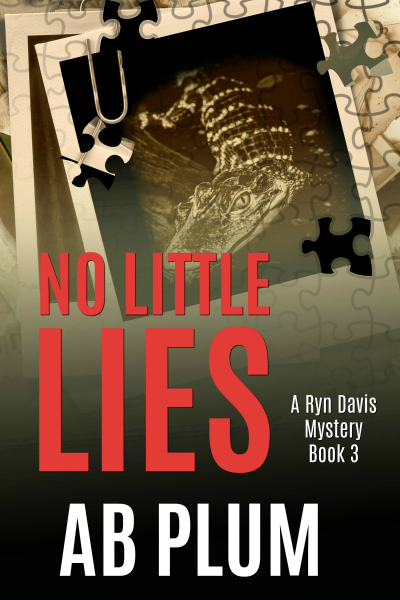
***  AB Plum lives, walks, and writes in the heart of Silicon Valley. No Little Lies, her third book in the Ryn Davis Mystery Series hits Amazon on July 6. Preorder here.  


Tuesday, February 21, 2017

Relatively Speaking

by J.M. Phillippe


I have been thinking a lot about relative experience.

“Relatively speaking” is a phrase we toss around casually, an improvised rescaling of any given comparison. Hidden in the phrase is an acknowledgement that the scale of comparison has been significantly reduced to include a limited range of possible experiences or perceptions of reality, and that range is defined by a supposedly shared context—both speaker and audience must acknowledge some general truths about the things being compared.  But it can also be a catch all, a brief acknowledgement that the context is not the same from one person to the next, that “the worst day ever!” in one life cannot be appropriately compared to the “worst day ever!” in another.

In my relatively limited (there’s that word again!) understanding of economics, I am able to grasp at least this concept: an apple does not cost the same to everyone who buys it. While the price of the apple may be fixed, the cost of that apple relative to the income of the individual buying it is not. Things can get more complicated when you don’t just compare income (we each make the same amount of money, so the apple should cost the same to both of us) but expenses as well: if we each make the same income, but your rent is higher than mine, that apple will be a greater percentage of your food allowance than it will be of mine. In that way, the apple could relatively cost you more. 

This sort of relative cost idea can be translated to experience as well, so that any given experience can cost or benefit any individual relative to the other experiences in their life -- everything needs context. A fender bender on a day where everything else is going well most likely won’t be perceived as negatively as if it happened on a day when several things seem to be going wrong. However, the context that a person operates in is not daily, but cumulative: even if nothing else is going wrong today, things have been going wrong all week, all month, all year, for the past decade. Any new experience is measured against previous experiences in order to determine its particular impact, positive or negative.

And yet, “nothing is good or bad, but thinking makes it so.” Without this comparison, any given experience could theoretically stand on its own. It wouldn’t be good or bad, relatively speaking, but simply good or bad, inherently. Or, in what I imagine as Buddhist thinking, neither good nor bad, but simply existing, ideally without impact, without contributing to some greater context, acknowledged and let go. If we could escape our contexts, maybe we could escape relative thinking. In theory, that is how to escape suffering.

Except an apple doesn’t cost the same to everyone. “Expensive” is a relative concept. So is safe, and healthy, and successful, and all the things we end up having to measure for ourselves, individually. I read in Loneliness (Cacioppo and Patrick, 2008) that people even have a biological set point for their need for social connection, varying from one person to another. Even our biology forces relativity on us.

So we seek out contexts similar to our own, or as close as possible. We look for people with similar experiences, similar perspectives, similar measurement scales. This is how I make sense of a world where otherwise nice-seeming people don't seem to grasp the pain and suffering of others. Their experiences are so far removed from those different than them that they have no reference point of comparison. For example, a white person living in an all-white community may not have had any direct experience with seeing a friend or loved one deal with racism and have trouble believing either that it exists or that it is as systemic as it is. It's the way that many men don't seem to get sexism until it impacts their daughters. If we are all stuck comparing everyone else's experiences to our own, relatively speaking, we all start to think that apples cost the same to everyone, and that other people are just complaining for no reason -- or are incapable of understanding the true value of an apple. It takes concerted effort to try to see the world through someone else's lens, and to understand how their cumulative experiences shape any given moment in their lives, to understand, for example, the anger that seems to come out of nowhere but is for that person the result of the straw that broke the camels back. 


Our internal scales can be powerful forces. But we can change those scales, and alter what we measure all of our experiences against; change the thinking, change the comparison, build compassion. In the meantime, if we resize our experiences, as Munroe said, to fit the scales in our head, it might be worth noting that other people have their own scales, too. And that we can't erase someone else's experiences just because we have no reference point to compare them to. We're not all buying the same apples with the same money, and we aren't all carrying the same straws on our backs. For those of us with privilege, the apples are always going to cost a little less, and we're going to start off with less straws to carry. For those without relative privilege, apples will always cost more, and their camels have been pre-loaded with burdens. 

It really is all relative. And context is everything. 

***
J.M. Phillippe is the author of Perfect Likeness and the short story The Sight. She has lived in the deserts of California, the suburbs of Seattle, and the mad rush of New York City. She works as a family therapist in Brooklyn, New York and spends her free-time decorating her tiny apartment to her cat Oscar Wilde’s liking, drinking cider at her favorite British-style pub, and training to be the next Karate Kid, one wax-on at a time.