
by Linda Rodriguez

All my life I’ve been a voracious
reader and writers have been important to me. They’ve helped me to
grow and mature. They’ve broadened my mind and my outlook. They’ve
inspired me to keep going when things looked grim and to aim for ever
loftier goals. Sometimes when I’ve been sick or in physical pain or
grief-stricken, they have taken me out of my situation for a few
hours and given me respite and relief. In so many ways, writers and
the books they wrote have been important to me and my life.
Still, I’ve noticed an odd thing—some
writers, who may have been hugely successful and famous, disappear
from view. It seems that some writers become so successful that the
critics and professors who set the canon of literature decide they
must not be any good because they're too successful. Who ever hears
or sees the name Edna Ferber now? Yet she was world-famous several
decades ago for her large novels telling the stories of states or
sections of America, such as Cimarron (Oklahoma), Ice
Palace (Alaska), So Big (Chicago), Come and Get It
(Wisconsin), Giant (Texas), and Showboat (the deep
South). Ferber won major awards for her books, which were always
bestsellers. Hollywood made huge, successful movies from many of
them, and Showboat was also a hit as a Broadway play, and her
movies and plays also often won major awards.
Ahead of her time and with a sure eye
for the plight of the underdog, Ferber often dealt with controversial
issues in her work, such as racism and miscegenation laws,
immigration, political corruption, the treatment of women and
minorities, issues that you wouldn’t expect to be at the center of
such popular books. Millions have found themselves mesmerized by her
portrayals of the people, places, and times she portrays, as I have
many times. She did extensive research for each book and was, in my
opinion, the unsung precursor of James Michener’s research-heavy
tomes about states in the US and hot-spot areas of the world and the
better writer. Ferber wrote real characters the reader could care
about, rather than mouthpieces for the various aspects of history or
area controversies as Michener did.
 Kenneth Roberts is another writer whose
books have vanished into the out-of-print bins at used bookstores and friends of library sales. His bestselling books, such as Northwest
Passage, Lydia Bailey, The Lively Lady, Captain
Caution, Arundel, Rabble in Arms, and Oliver
Wiswell, focus on the periods of American history before and
during the American Revolution, and many of them were made into
successful films and TV series.
Roberts was famous for his meticulous
research into his period, and he told the stories of heroes and
mavericks on both sides of that struggle. I think he was the first
popular writer to offer the sympathetic portrayals of the Loyalist
(usually called Tory) families who had to go into exile once the
United States was independent, as well as the families and soldiers
who fought for independence. Roberts wrote about the founding fathers
and the soldiers who fought for the American Revolution, warts and
all, as very real human beings with often conflicting motives and
with families and other entanglements that complicated their efforts.
When I finish one of his books, I always feel as if I have lived
through the period that book covers in a complete immersion
experience.

Pearl Buck is one of these once-great
and now-forgotten authors who’s getting a new lease on life through
the influence of Oprah Winfrey. I know it’s fashionable in literary
circles to criticize Oprah, but I believe she provides America, in
general, and literary culture, in particular, a real service in
encouraging reading and in bringing recognition to forgotten or
overlooked works. Look at what happened to Pearl Buck. Even though
Buck was the first American woman to receive the Nobel Prize for
Literature, her bestselling and award-winning books, such as The
Good Earth, Sons, A House Divided, Other Gods,
China Sky, Dragon Seed, Pavilion of Women,
Peony, The Big Wave, and Imperial Woman, had
mostly been out of print. The gatekeepers of American literature,
professors and critics, had pretty much consigned her books to the
ash heap as “not literary enough” until Oprah pointed a spotlight
back on her Pulitzer Prize-winning masterpiece, The Good Earth.
I love what Buck said in her Nobel
acceptance speech. She pointed out that, in

What authors of the past have been
favorites of yours and helped you make it through times of illness or
boredom or other difficulty? What writers who are out of fashion now
would you like to see back in print and in active circulation?
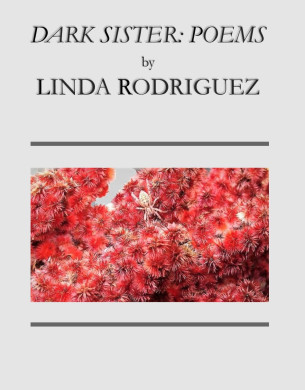
 Linda Rodriguez's Dark Sister: Poems
has just been released. Plotting the Character-Driven Novel,
based on her popular workshop, and The World Is One Place: Native
American Poets Visit the Middle East, an anthology she co-edited,
were published to high praise in 2017. Every Family Doubt,
her fourth mystery novel featuring Cherokee campus police chief,
Skeet Bannion, will appear in August, 2018, and Revising the
Character-Driven Novel will be published in November, 2018. Her
three earlier Skeet novels—Every Hidden Fear, Every
Broken Trust, and Every Last Secret—and
her books of poetry—Skin Hunger
and Heart's Migration—have
received critical recognition and awards, such as St. Martin's
Press/Malice Domestic Best First Novel, International
Latino Book Award, Latina Book Club Best Book of 2014, Midwest Voices
& Visions, Elvira Cordero Cisneros Award, Thorpe Menn Award, and
Ragdale and Macondo fellowships. Her short story, “The Good
Neighbor,” published in the anthology, Kansas City Noir, has
been optioned for film.
Rodriguez is past chair of the AWP
Indigenous Writer’s Caucus, past president of Border Crimes chapter
of Sisters in Crime, founding board member of Latino Writers
Collective and The Writers Place, and a member of International
Thriller Writers, Wordcraft Circle of Native American Writers and
Storytellers, and Kansas City Cherokee Community. Visit her at
http://lindarodriguezwrites.blogspot.com

