
Showing posts with label #kathrynlane. Show all posts

Tuesday, March 1, 2022

Writing and Selling Fiction in the Metaverse

 By Kathryn Lane

In the near future, when a reader purchases a book, that reader can also receive additional 3-D experiences depicting the author’s world, how the author researched, created, and wrote that particular book.


Interacting with the metaverse.

As readers, we will be able to interact through virtual reality (VR) with our favorite authors. Though I don’t write in his genre, I can imagine a VR encounter with JRR Tolkien where I’d walk beside him in the scenes while he described his imaginative process in writing Lord of the Rings. Music, as in the films, should run too. But then I’d turn it off to better understand Tolkien’s creativity before the scenes were set to music. Tolkien is no longer living, but artists, writers, historians, script writers, photographers, and cinematographers would create the immersive where I’d be in the middle of the narrative.
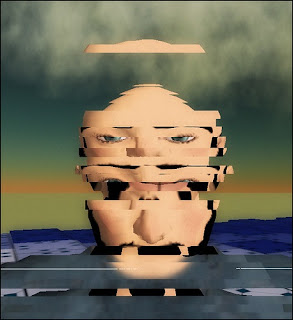
Distortion in the metaverse.

Writers will have a variety of options for selling their works in the Metaverse. Unique codes, think of ISBNs currently used, will identify the digital asset that is linked to blockchain to secure its authenticity and uniqueness. This process creates a non-fungible token (NFT). For example, limited editions of digital works can then be sold as NFTs. Book covers and draft manuscripts also offer the possibility of NFT sales.

Blockchain provides a secure means for storing intellectual property like copyrights and patents, and includes smart contracts where author royalties can be collected every time an NFT book cover, limited edition, or a first draft manuscript is re-sold.


Visual representation of blockchain.

Big name authors with staff to do research, design, and marketing will have the advantage over lesser-known authors. They might turn their books into complete immersive experiences where readers don’t read but merely step into the story.

VR and the Metaverse will be used extensively in other areas, especially education. By combining topics such as math and science; language, geography, and history, among other subjects, learning can become more integrated. 

Student using the metaverse.

However, it’s not all panacea here either. Richer countries will have the advantage over poorer ones.

If you feel concerned about the Metaverse, you are not alone. If we think of it as the next level of the Internet, it becomes less intimidating. Though I remember how reluctant people felt in the early to mid-nineteen-nineties about using the Internet.

Are you ready to enter the brave new world of NTF books?

***

Kathryn's latest Nikki Garcia Mystery Thriller: Missing in Miami (available on Amazon)

About Kathryn

Kathryn Lane started out painting in oils and quickly became a starving artist. To earn a living, she became a certified public accountant and embarked on a career in international finance with a major multinational corporation. After two decades, she left the corporate world to plunge into writing mystery and suspense thrillers. In her stories, Kathryn draws deeply from her Mexican background as well as her travels in over ninety countries.

Visit my website at https://www.Kathryn-Lane.com

Photo credits:

All photographs are used in an editorial and/or educational manner

Augmented reality from Pinterest

Dreaming of distortion in the metaverse by Dean Terry is licensed under CC

Photo by Terry on Unsplash

AugustMan - Malaysia


Tuesday, September 7, 2021

Deadlines

By Kathryn Lane

I love deadlines! They revitalize me. Twists and turns in my mystery novels become more exciting once I’m approaching the deadline with my editor.

Not all deadlines are equal. Some are important; others can be juggled. Then there are deadlines I gleefully ignore.

At times, I fantasize what would happen if I missed such and such important deadline. That activity takes the form of various possible outcomes, as if I lived in a quantum world where there’s an infinite number of possibilities.

Meeting a deadline!

And it reminds me of a wonderful European film from 1998 titled, Run, Lola, Run. An experimental film at the time, the lead character, Lola, needs to acquire $100,000 deutschmarks in TWENTY minutes or her boyfriend will die. The film gives three versions of what happens. Each version is predicated on the lapse of a few seconds where random, unexpected events happen that impact Lola’s ability to obtain the money. These random events change each one of the three endings.

In the past month, I’ve had the opportunity to think about random, unexpected things that happen. Some are good, some not so good.

On the return trip from the Killer Nashville International Mystery Writers’ Conference (which was wonderful) in late August, we experienced an unexpected event.

Driving through Georgia, a speeding motorist hit us a few miles south of Atlanta. Fortunately, everyone, including the motorist who hit us, walked away with only minor bruises. A different story for the vehicles – both were totaled.

Random events, good or bad, set off unexpected consequences, which ripple through already planned events, like getting a manuscript finished for your editor.

Meeting manuscript deadlines!

As in the three outcomes in Run, Lola, Run, my mind considered various scenarios: If only we had not stopped for gas when we did, if only we had started our journey a few minutes earlier (or later) that day, if only we had been in a different lane. But we don’t live in a quantum world. Nor do we live in a world where we can restart the day and get a different outcome.

Small, unplanned events can add spice to life. Large ones, like car accidents, can create havoc on deadlines. C’est la vie.

Deadlines are important to my characters too. It’s like they’re telling me “If you write it this way, it will be better”. Or they will kick my butt, saying “Go this other direction and get our story told”.

Maybe that’s a little like the different outcomes in Run, Lola, Run. In novels, only the author knows the various endings that could have taken place.

How do you handle deadlines?  

***

Kathryn’s mysteries – The Nikki Garcia Mystery series:

https://www.amazon.com/gp/bookseries/B08C7V2675/ref=dp_st_1942428944


Kathryn’s short story collection – Backyard Volcano and Other Mysteries of the Heart

https://www.amazon.com/Backyard-Volcano-Other-Mysteries-Heart/dp/1943306044


 All available on Amazon

 Kathryn Lane started out as a starving artist. To earn a living, she became a certified public accountant and embarked on a career in international finance with a major multinational corporation. After two decades, she left the corporate world to plunge into writing mystery and suspense thrillers. In her stories, Kathryn draws deeply from her Mexican background as well as her travels in over ninety countries.

https://www.kathryn-lane.com


Tuesday, July 6, 2021

When I Visited Walden Pond

By Kathryn Lane

The past three years, my husband and I have spent the summers in a cabin in northern New Mexico. We are isolated, in a way. We are connected to the outside world with excellent internet, workable phone communications, and muddy dirt roads during the rainy season.

As I watch the deer, elk, birds, and the occasional bear, I’m reminded of my favorite Henry David Thoreau quote "We can never have enough of nature." And that takes me to his experiences at Walden Pond.

During my corporate years, I mostly worked overseas, but on two rare occasions I had domestic assignments. One of those instances, I went to Boston for three weeks. I loved the city and became mesmerized by its history, especially that pertaining to the American Revolution. Being from Mexico, I did not know US history and this was a unique opportunity. In the evenings, I walked the Freedom Trail, stopping along the way at Faneuil Hall, the old State House, and continuing to Paul Revere’s statue and his home, now the oldest building in downtown Boston.

One weekend, I visited Lexington and Concord where the revolution started. Being an avid cyclist at the time, I rented a bicycle so I could visit Walden Pond. Thoreau’s book, Walden, intrigued me and here was my opportunity to cycle around the entire pond and enjoy the place where he had lived for a couple of years.

The pond, a kettle hole formed by retreating glaciers about 10,000 years ago, was worth seeing, not to mention experiencing the place Thoreau made famous. The shores of the pond consisted of terrain suitable for walking but I quickly learned that tree roots and sharp rocks were not kind to bicycle tires! After fixing a flat halfway around, I decided to walk the bike the rest of the way to make sure I could ride back to Concord where I’d left the rental car.

Now that I live close to nature part of the year, I reflect on Thoreau's years there and his writing.

The central ideas expressed in Walden are experience, self-reliance, and worship. He examined the fundamental elements of humanity. Very lofty ideas.

My novels are genre, plain and simple. And I love writing them from a mountain cabin! Yet, as an author who loves history, you’d think I’d write historical novels. Mysteries and thrillers fascinate me and that’s what I write. I’m captivated by the twists and turns of mystery and suspense.

Of course, there are historical mysteries. Humm, I’ll have to ponder that thought while enjoying the mountain scenery of northern New Mexico!

Do you secretly wish you wrote in a different genre?

***

Visit me at https://www.Kathryn-Lane.com I love hearing from readers. Ask a question, suggest an idea, or comment about the blog.

The Nikki Garcia Mystery Series: eBook Trilogy https://www.amazon.com/dp/B08GZNF17G


Kathryn Lane started out as a starving artist. To earn a living, she became a certified public accountant and embarked on a career in international finance with a major multinational corporation. After two decades, she left the corporate world to plunge into writing mystery and suspense thrillers. In her stories, Kathryn draws deeply from her Mexican background as well as her travels in over ninety countries.

Tuesday, June 1, 2021

Researching in Miami

 By Kathryn Lane

I place my novels in countries where I traveled during my corporate job. Miami is a city where I attended many regional conferences. I also passed through the international airport innumerable times coming from or going to Latin America and the Caribbean. Yet I only saw the city from airline windows as we approached the airport, through taxi windows as we drove to hotel conferences, or from hotel rooms for the couple of days I would attend meetings.  

Now I’m setting a novel in Miami. It’s the perfect excuse to do on-site research and get to know the city. I’d planned this trip last year and then Covid hit, so I put my novel on hold. Now I’m here in a wonderfully hospitable city. I love that Spanish is spoken everywhere. A diverse city, Miami is a melting pot of people from Latin America and the Caribbean. And yet there are immigrants representing every country in the world. Tourists from around the globe flock here, too.

My novel starts in Miami and takes my protagonist, Nikki Garcia, to Cuba. Of course, I do online research before I travel. Online experiences do not provide the “feel” of a place, the culture, the food, or the special little bits of information I like to add to my novels.


My husband is a wonderful travel companion on research trips. He’s a great sport when I ask him to explore areas he might not be interested in seeing. Over the time I’ve been an author, we’ve encountered surprises, whether it’s walking the old neighborhoods of Barcelona to locate a mosque as in a previous trip, or to explore a section of the Everglades, like on this trip. Or finding a Cuban restaurant in Little Havana in Miami, walking in, and discovering it served Spanish food, not Cuban. What the heck, we were there so we ate seafood paella.

When I’m performing on-site research, I like to put myself into Nikki’s shoes. How would she react to living in a condo in Miami Beach? Eating at Little Havana? Interviewing security guards in Doral? Would she shop for fresh lychee fruit and orchids in the Redlands agricultural area on the west side of the city? Should she discover a corpse in the Everglades or in a canal on Cutler Bay? Would she visit the Deering Estate and Key Biscayne?

Bob and I follow the outline of the places I want to investigate. Doing this work makes me feel like a location scout for a big production company. Of course, this is only one part of my research. And it’s definitely the most fun!

After indulging in food, music, and culture, then reality sets in and I have to actually write the story!

***

What kind of research do you do? Do you enjoy researching various topics for your novels? Ever done on-site research?

Visit me at https://www.Kathryn-Lane.com I love hearing from readers. Ask a question, suggest an idea, or comment about the blog.

Kathryn Lane started out as a starving artist. To earn a living, she became a certified public accountant and embarked on a career in international finance with a major multinational corporation. After two decades, she left the corporate world to plunge into writing mystery and suspense thrillers. In her stories, Kathryn draws deeply from her Mexican background as well as her travels in over ninety countries.

https://www.kathryn-lane.com

https://www.facebook.com/kathrynlanewriter/

The Nikki Garcia Mystery Series: eBook Trilogy https://www.amazon.com/dp/B08GZNF17G


Photo credits:

All photographs are used in an editorial or educational manner.

The Grounds at Deering Estate, Lily Pads in the Everglades, and Server Showing Paella are photos by Kathryn Lane


Tuesday, May 4, 2021

Serendipitous Discovery!

By Kathryn Lane

A week's’ worth of newspapers, yes, old-fashioned printed versions, beckoned me on the coffee table. I confess that in the midst of downsizing and moving, I’d been too busy to read them.

Working my way through the papers, I hit serendipity! An article about the changing car culture.

Ford's 1896 Quadricycle

What was serendipitous about that? It covered a topic I’d mentioned in my May newsletter.

First, I should explain that I ask my newsletter readers to submit their favorite quote to me, promising that I will use it in a future newsletter.

This month’s quote was: “My friends are my estate”, submitted by Ann McKennis, a fabulously supportive fan of my work. Instead of analyzing why an introvert like Emily Dickinson would write these words to a friend in a letter, I explored the idea of friends.

So I wrote about the lifelong friendship of inventors Thomas Edison and Henry Ford. In 1896, Ford introduced his quadricycle. It ran on gasoline. Edison congratulated his friend, but told him to “keep at it”, predicting electric cars were the wave of the future. It also inspired Edison to work on an electric version.

Thomas Edison and Henry Ford 

As a writer, why are cars important to me? Authors use them in novels all the time. Think getaway cars in a robbery, luxury vehicles villains use to impress women, and forensic investigators recovering evidence from cars involved in homicides. Vehicles often break down on dark, isolated roads in crime stories. The list goes on.

Cars are important in real life crime as well. John Dillinger, the infamous criminal, made the Model A Ford synonymous with a gangster’s choice in driving during the 1930s. Then Bonnie and Clyde used a 1934 Ford 730 Deluxe Sedan, a car later riddled with bullets when they were killed.

The Bonnie and Clyde Car

I marveled at the coincidences of stumbling upon a great article about electric and gasoline cars, especially since Edison and Ford were mentioned. Plus, I learned something new: in the early 1900s in New York City, there were more electric cars than those that ran on gasoline.

So what happened? According to Daniel Yergin, Edison put money, effort, and his personal prestige into developing an electric vehicle, but Ford’s gasoline Model T won the hearts of car buyers. Almost a century later, General Motors introduced a mass-market electric vehicle. In 2008, Tesla introduced the stylish Roadster.

Fiction writers will follow the trend. Electric cars are here to stay. The infrastructure to support self-driving vehicles is under construction. I’m anxious to see authors using self-driving cars for getaways. Of course, institutions that villains can rob may be all online, making the getaway car obsolete.

***

Are you using electric cars in your novels?


Kathryn Lane started out as a starving artist. To earn a living, she became a certified public accountant and embarked on a career in international finance with a major multinational corporation. After two decades, she left the corporate world to plunge into writing mystery and suspense thrillers. In her stories, Kathryn draws deeply from her Mexican background as well as her travels in over ninety countries.

https://www.kathryn-lane.com

https://www.facebook.com/kathrynlanewriter/

The Nikki Garcia Mystery Series: eBook Trilogy https://www.amazon.com/dp/B08GZNF17G

 Photo credits:

Quadricycle: "1896 Ford Quadricycle Runabout, First Car Built by Henry Ford" by The Henry Ford is licensed under CC BY-NC-ND 2.0

Thomas Edison and Henry Ford by Tom Raftery is licensed under CC BY-NC-ND-SA 2.0

The Bonnie and Clyde Car "DSC_0081" by Jay Bonvouloir is licensed under CC BY-NC-ND 2.0

Newspaper Article: Wall Street Journal, Weekend Edition ─ April 24-25, 2021; “The New World of AutoTech” by Daniel Yergin.

Kathryn’s books – designs by Bobbye Marrs


Tuesday, December 1, 2020

When Pigs Fly


"When pigs fly" is an adynaton, an absurd figure of speech to describe an action or event that will never happen. But in literature, there are several examples of pigs that take action or participate in events, and a few indeed fly.

In real life in 2020, pigs are flying…on commercial airlines!

A consequence of less people on flights is that airline companies are repurposing their planes to take pigs around the globe. That’s right – the cargo bays of jets are transporting more animals than ever before, especially hogs to China. In addition to the flight crew, animal handlers are on board to monitor the pigs’ temperaments and to fill the porcine sipper bottles. The only drawback, according to handlers, is the distasteful aroma of even the cleanest and most scrubbed-down porcine.

Returning to the idea of pigs in literature, most western kids grow up reading or at least hearing about The Three Little Pigs. In recent years, children may have read The Three Little Javelinas, where the story is recast with wild boars of the Southwestern US. They build their home using tumbleweed, saguaro ribs, and adobe. A coyote huffs and puffs to blow the house down instead of a wolf. And there’s The Three Ninja Pigs intended to take literary swine to ninja fans. And in Today I Will Fly, Piggie is determined to fly.


But the best example of pigs in literature is perhaps Animal Farm.

If George Orwell were writing Animal Farm today, would he have Napoleon and Snowball argue about taking over the future of aviation, placing pigs in the cockpit, having flight attendants take alcoholic drinks to the passengers in first class? Would it be Mr. Jones who would be in the cargo bay?

Would Orwell have the common animals in coach peering into first class and the cockpit, and realize they could no longer differentiate the swine from the humans?

Leaving Orwell aside, I can see Noah’s Ark becoming Noah’s Jet. Instead of embarking on a boat, the giraffes, elephants, chipmunks, bears, antelopes, horses, birds, and remaining critters could simply board a Boing 777 or an Airbus A330, and fly off to higher ground until the flood waters recede.

Personally, I will never get on another jet without wondering if unpleasant odors will rise from the cargo
bay. For that, I already have my mask ready!

Do you have your mask?

                                                                    ***


The Nikki Garcia Mystery Series  -  https://www.amazon.com/dp/B08GZNF17G

Kathryn Lane started out as a starving artist. To earn a living, she became a certified public accountant and embarked on a career in international finance with a major multinational corporation. After two decades, she left the corporate world to plunge into writing mystery and suspense thrillers. In her stories, Kathryn draws deeply from her Mexican background as well as her travels in over ninety countries.

https://www.kathryn-lane.com

Book Credits:

The Three Little Pigs by Joseph Jacobs, first published on June 19, 1890

The Three Little Javelinas by Susan Lowell/Illustrated by Jim Harris

The Three Ninja Pigs by Corey Rosen Schwartz/Illustrated by Dan Santat

Today I Will Fly by author/illustrator Mo Willems

Photo Credits:

Flying Pigs by BugMan50 – licensed under CC BY-NC 2.0

Animal Farm book cover – Public Domain

Flying Pig Mask – Public Domain

Kathryn’s books – designs by Bobbye Marrs


Tuesday, November 3, 2020

Mystery and Romance Authors - How Many Books Should You Publish?


Antique Underwood Typewriter and Calla Lilies
Social media has swept instant and fleeting tidings over us - the expectation of continuous news snippets. I wondered how this impacts the work of authors. In doing research, I found an interesting quote from Donna Tartt, the Pulitzer Prize-winning author of The Goldfinch:

“There's an expectation these days that novels – like any other consumer product – should be made on a production line, with one dropping from the conveyor belt every couple of years.”

Every couple of years? I was astounded. Quite a few authors, including New York Times bestselling ones produce at least one book a year, such as Stephen King, Danielle Steel, Harlan Coben, and Jeffery Deaver. I also know writers who publish four books a year – and happen to be USA Today bestselling authors. Probably none of the ones I’m thinking of will be honored with a Pulitzer, but they are satisfying their fan base by penning multiple novels per year.

 ca
Antique Printing Press
It gives the aphorism “publish or perish” a whole new meaning. The impact on genre authors to keep
publishing new books increases their fan base, improves their rankings on Amazon, and sustains their visibility among readers within their genres.

Yet The Goldfinch author takes ten years (that’s right – a full decade!) to write a novel. A literary genius, Tartt has fans across the globe. Plus, she’s backed by big publishing houses and their gargantuan budgets, here and abroad.

Most of us who write genre would “perish” if we only produced one novel every ten years.

Selling novels boils down to two basic issues:

A. Storytelling ─ writing a compelling and fascinating story.

B. Markets ─ how these “consumer products” that Tartt mentions are advertised and distributed.

In 2018, more than 1.6 million books (both print and eBook with registered ISBNs) were published in the US alone. You can dismiss a portion of these as coming from aspiring writers or people doing a memoir for family purposes. But the point is made ─ the diversity of choices for readers contributes to the difficulty new authors encounter when trying to distinguish themselves in a crowded market.

Despite the intense competition, I would not for a minute give up my writing! It’s the most satisfying, and craziest, endeavor I’ve ever done.

Care to share how you distinguish your novels in the crowded market?

***

Photo credits: Kathryn Lane for Antique Underwood Standard Typewriter, Printed page flying off antique printing press; Bobbye Marrs for Nikki Garcia Trilogy

Kathryn Lane started out as a starving artist. To earn a living, she became a certified public accountant and embarked on a career in international finance with a major multinational corporation. After two decades, she left the corporate world to plunge into writing mystery and suspense thrillers. In her stories, Kathryn draws deeply from her Mexican background as well as her travels in over ninety countries.

https://www.kathryn-lane.com

https://www.facebook.com/kathrynlanewriter/


Tuesday, October 6, 2020

Tripping Over Research

 By Kathryn Lane

Planning a research trip!

Research is a must for scientists and academic writers who either “publish or perish”. And it’s also a necessary activity for people who pen non-fiction, historical fiction, and science fiction.

But what about genre writers?

To me, authenticity is important in novels. Without it, readers lose interest. Plot, characters, setting, and time period are important elements that often should be augmented with research. For example, a character with a particular illness must be presented authentically, so research of symptoms and treatments could be important.

Sagrada Familia Basilica 

As a suspense and mystery author, I delve into police procedures, murder weapons, guns and how to use them, and even the interior of ambulances. Settings form an important element in my novels ─ I often place my stories in foreign countries. To make the reader feel they are experiencing that locale, I do online research. Before completing a manuscript, I take a trip, camera in tow, to check out my locations. I want to verify I’ve described the environment as accurately as possible, including geography, culture, architecture, historical facts, or even practical items such as how the police are organized in another country.

Before completing my last novel, Revenge in Barcelona, my husband and I traveled to Spain. We spent time imbibing the culture, sampling the food, verifying historical tidbits, and touring architectural sites I’d built into the story. Plus a friend in Barcelona set up a meeting with an antiterrorism agent (who remained anonymous) to discuss the various police and counterterrorism forces working in Catalonia, the part of Spain where the tale happens.

Cave Art from Aurignac

Early in the manuscript, I had protagonist Nikki Garcia and her fiancé visit Franco-Cantabrian caves containing paleolithic art. I’d built scenes where the antagonist followed them, just out of sight, through these isolated parks. I’d personally visited the caves to get them right. While editing the manuscript, I realized the cave section did not fit the story or add real intrigue. It was an information dump. So I cut that adventure, retaining only a couple of passing mentions to the antiquity of cave art since it’s in keeping with Nikki’s character and her love of ancient archaeological history.

How did I realize I had an info dump? Following my rule that research incorporated into fiction should be balanced, I’d highlighted my research in yellow as I wrote to keep track of it. Upon editing the work, the unnecessary research popped out ─ I was literally tripping over my research.

***

Have you ever researched so intensely that you’ve incorporated an information dump into your writing?

                                                                                ***

Photo credits: Map - courtesy of glenn-carstens-peters-ZWD3Dx6aUJg-unsplash.

Façade of Sagrada Familia Basilica, Cave Art from Aurignac, and Nikki Garcia Trilogy by Kathryn Lane. 


Kathryn’s books – The Nikki Garcia Mystery Series and her short story collection – Backyard Volcano. All available on Amazon. https://www.amazon.com/dp/B082H96R11

Kathryn Lane started out as a starving artist. To earn a living, she became a certified public accountant and embarked on a career in international finance with a major multinational corporation. After two decades, she left the corporate world to plunge into writing mystery and suspense thrillers. In her stories, Kathryn draws deeply from her Mexican background as well as her travels in over ninety countries.

https://www.kathryn-lane.com

https://www.facebook.com/kathrynlanewriter/